Caroline‘s lecture today was on glazing. Glazing is the layering of transparent mediums in order to affect change in the color of the original piece. It was used during the renaissance, especially using sepia in up to 40 thin layers. Impressionist did not glaze.
Carolyn stated that acrylic glazing mediums are used along with other acrylic mediums. In her demo, she used water as she did not have the glazing medium close at hand.
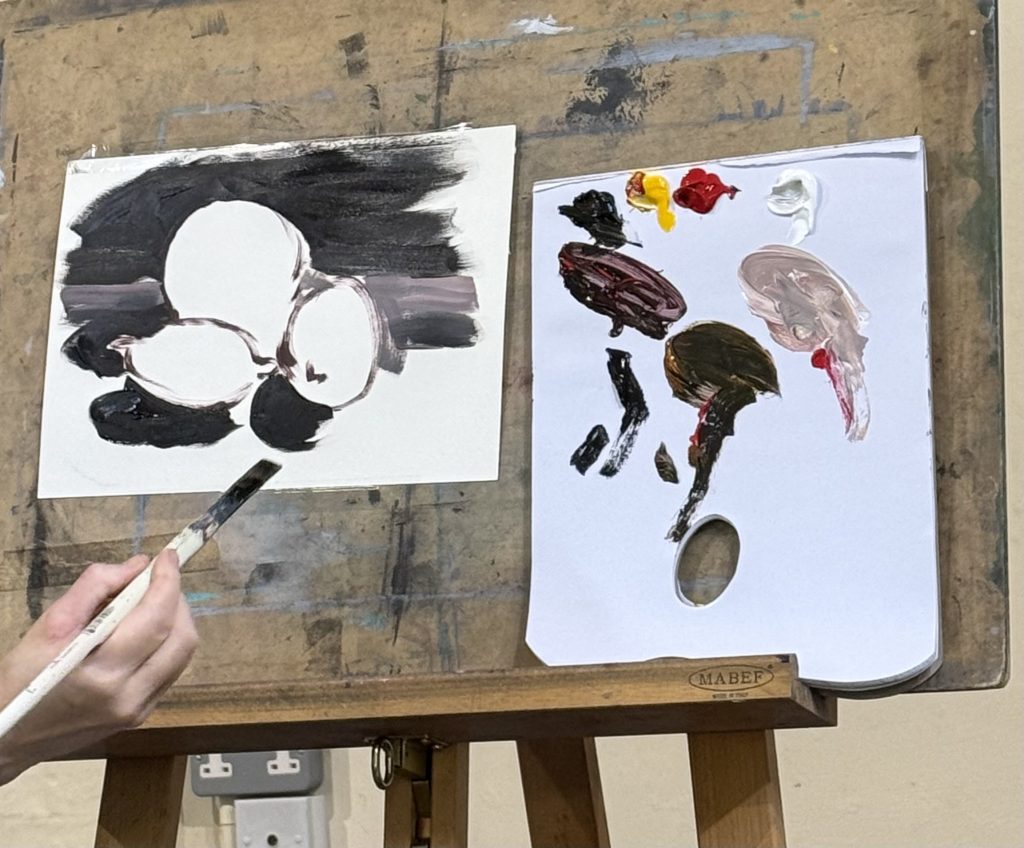
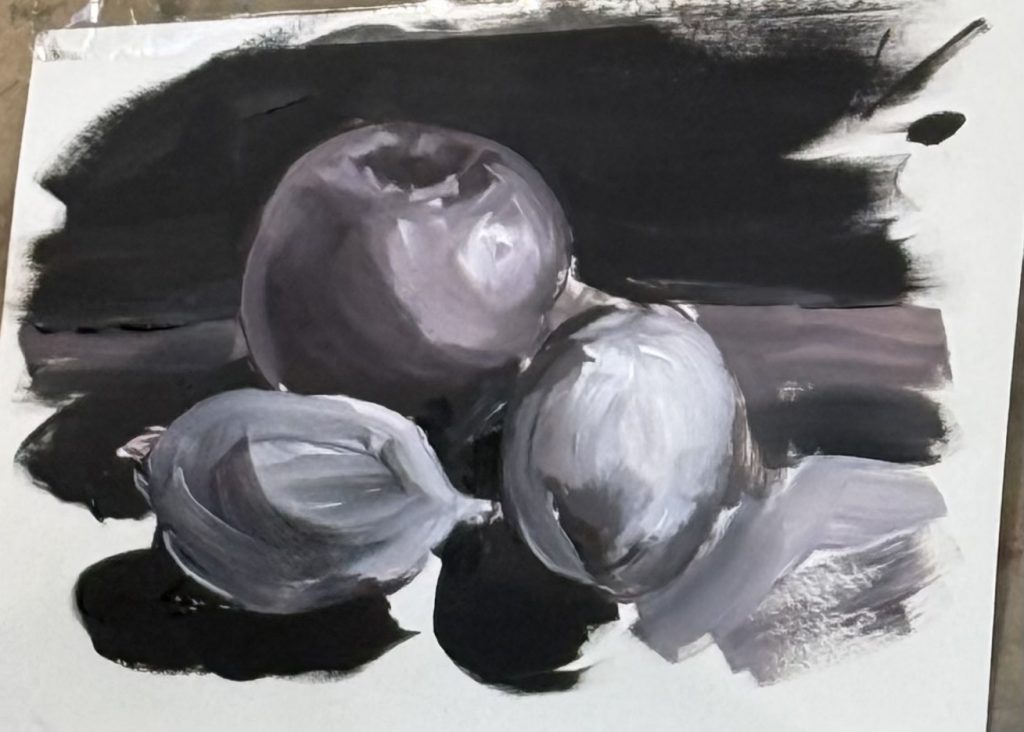
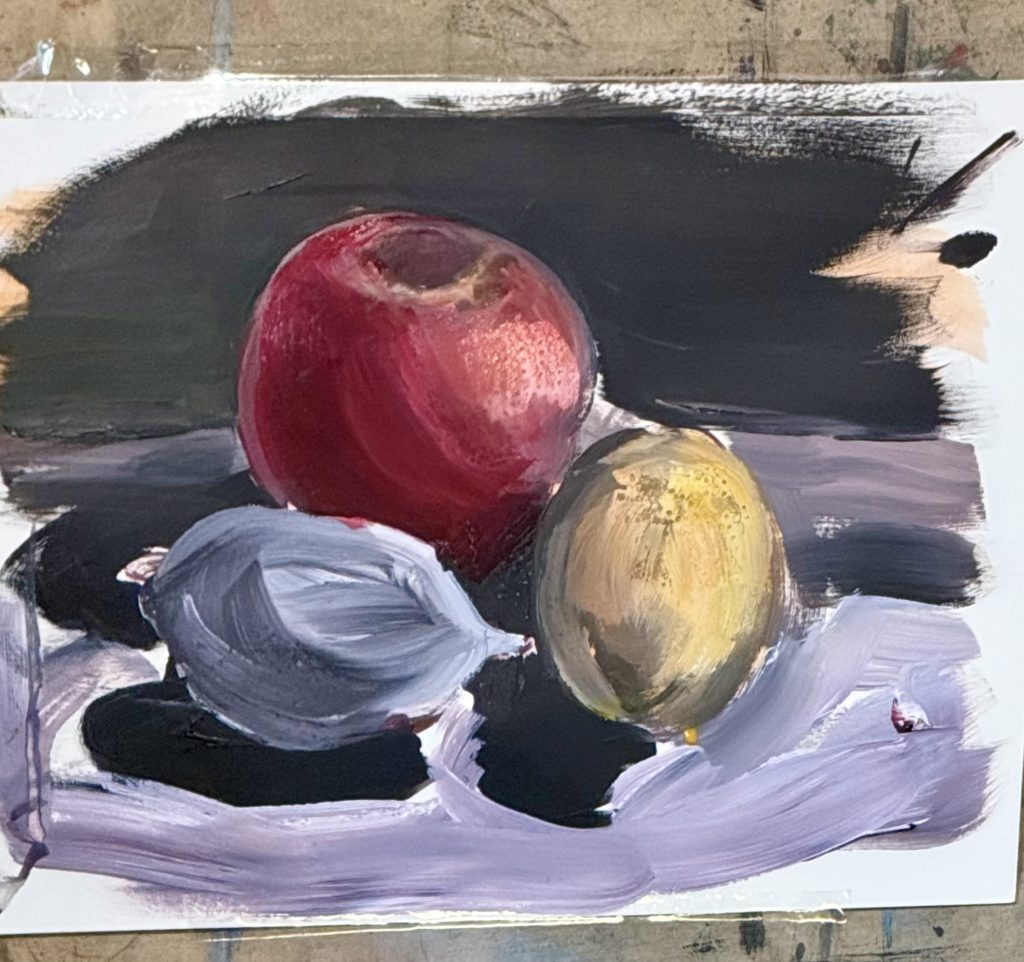
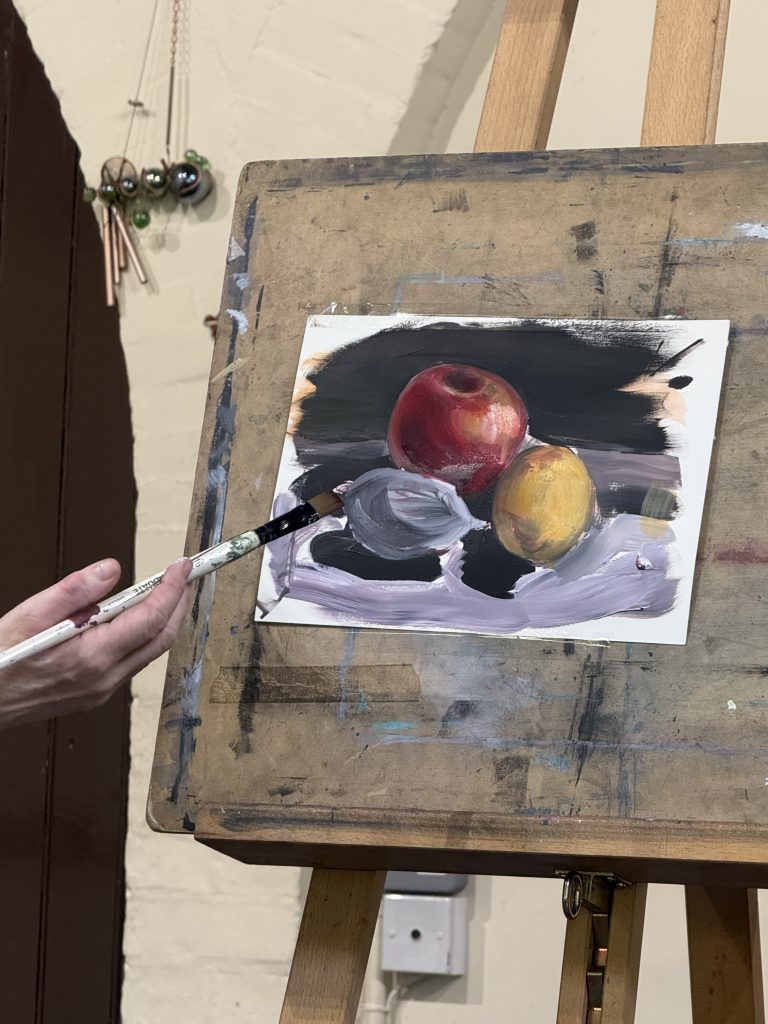
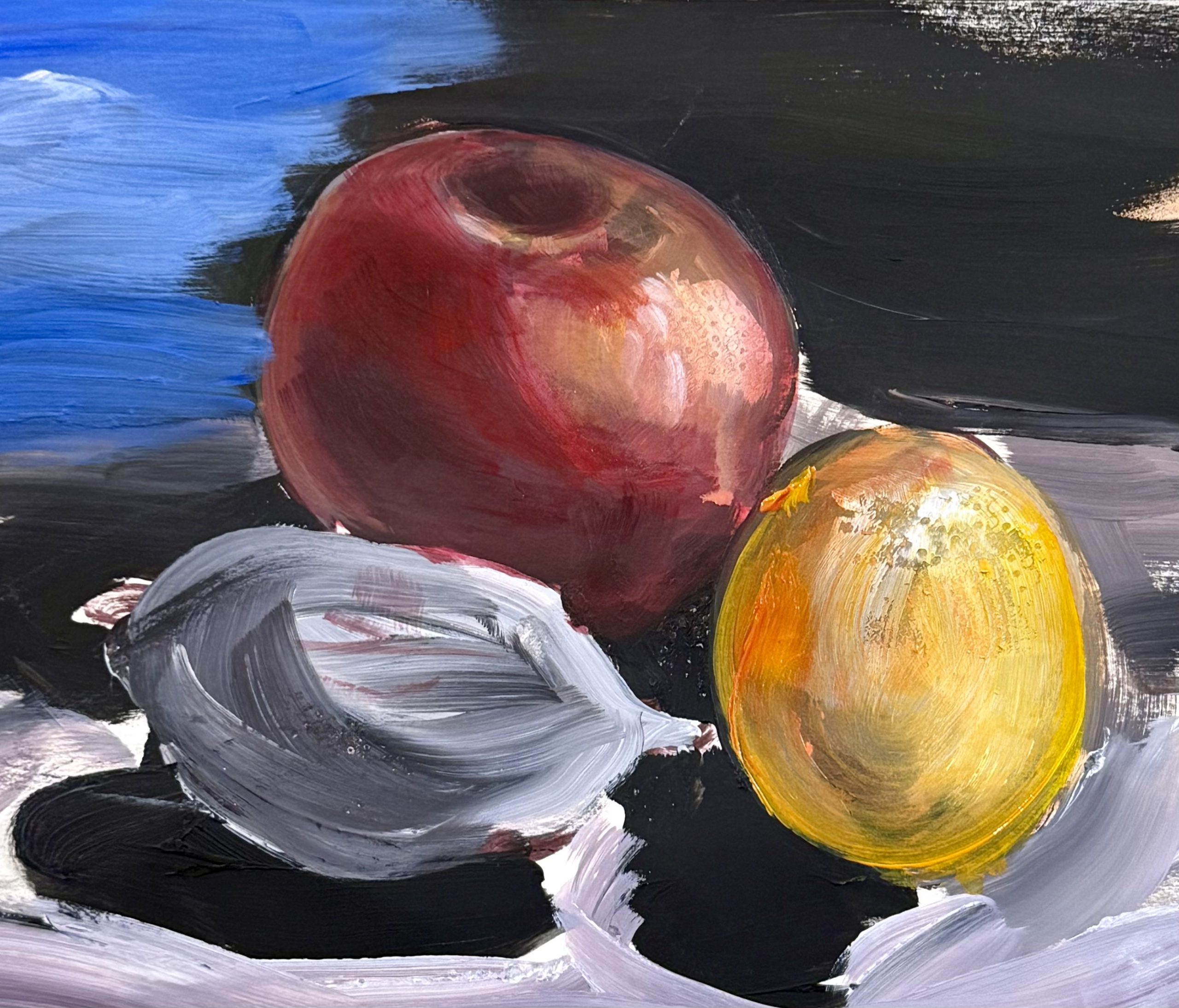
She started with the drawing of three fruits with a dark background, using yellow, red, black and white paints effecting a disappearing edge and reflected light. She used a watered down red color letting it dry in between layers. It gave an optical effect tinting a subtle change in the black colour. Watered down yellow was added. She warned that white paint added would give a chalky effect but can be used to lighten. Adding the layers of glaze gives the picture luminosity. The more layers you put on the smoother it becomes showing no brush marks and giving a lovely depth of field.
She stated that glazing was excellent for using in portraits with the skin color. She used combinations of yellow and orange with a mixture of black and blue for the shadow areas.